National Conference | Jaipur | 9–10 December 2025
India’s food system is at a crossroads. Declining soil health, climate uncertainty, rising input costs, and unstable markets are putting immense pressure on smallholder farmers. Addressing these interconnected challenges requires more than isolated interventions — it calls for a holistic transformation of how food is grown, valued, and traded.
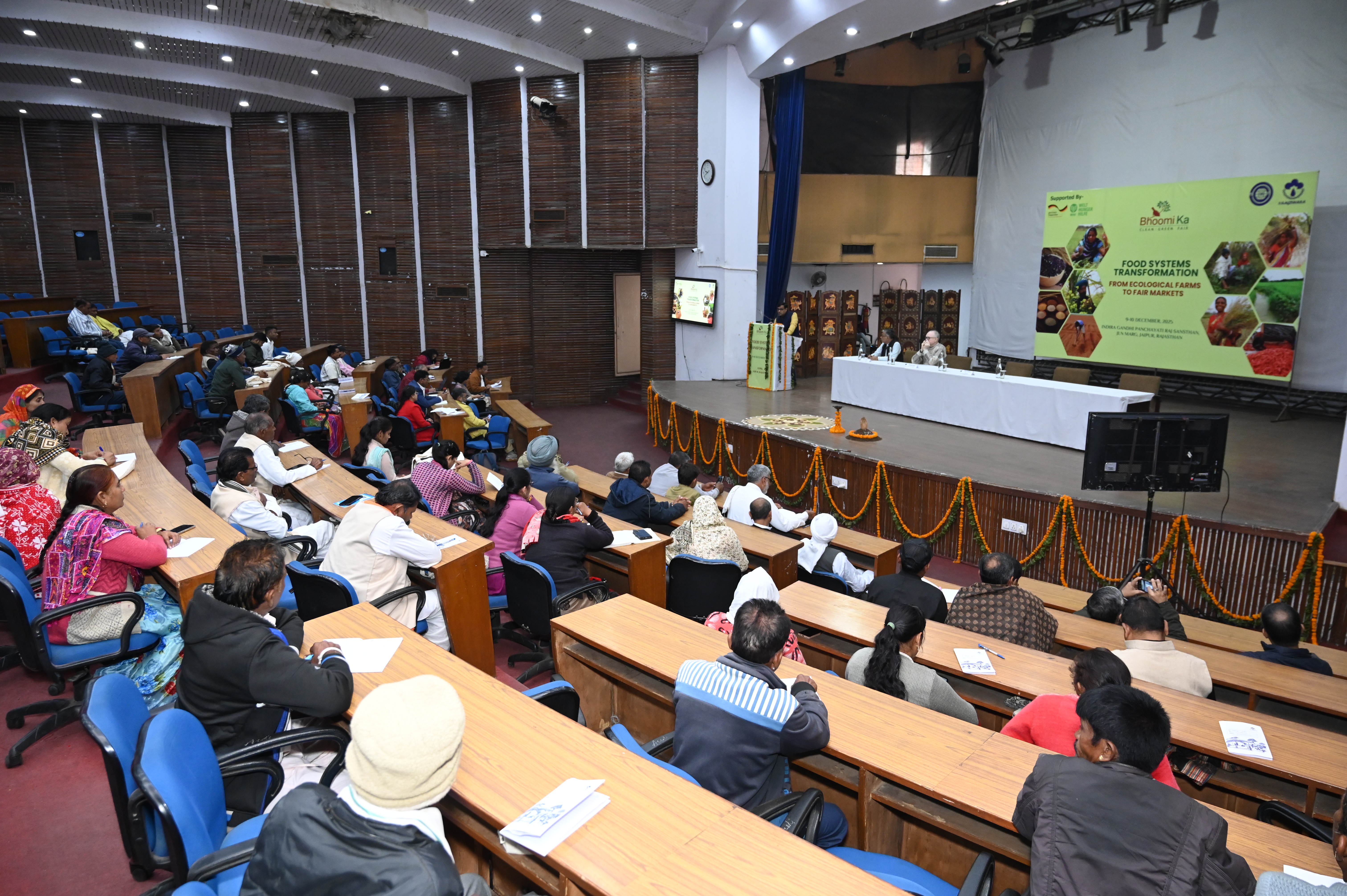
Against this backdrop, the National Conference 2025, a two-day conference, brought together farmers, Farmer Producer Organizations (FPOs), small and medium enterprises (SMEs), ecopreneurs, civil society organizations, researchers, market actors, and policymakers from across India.
Setting the Context: Reconnecting Soil, Farmer, and Market
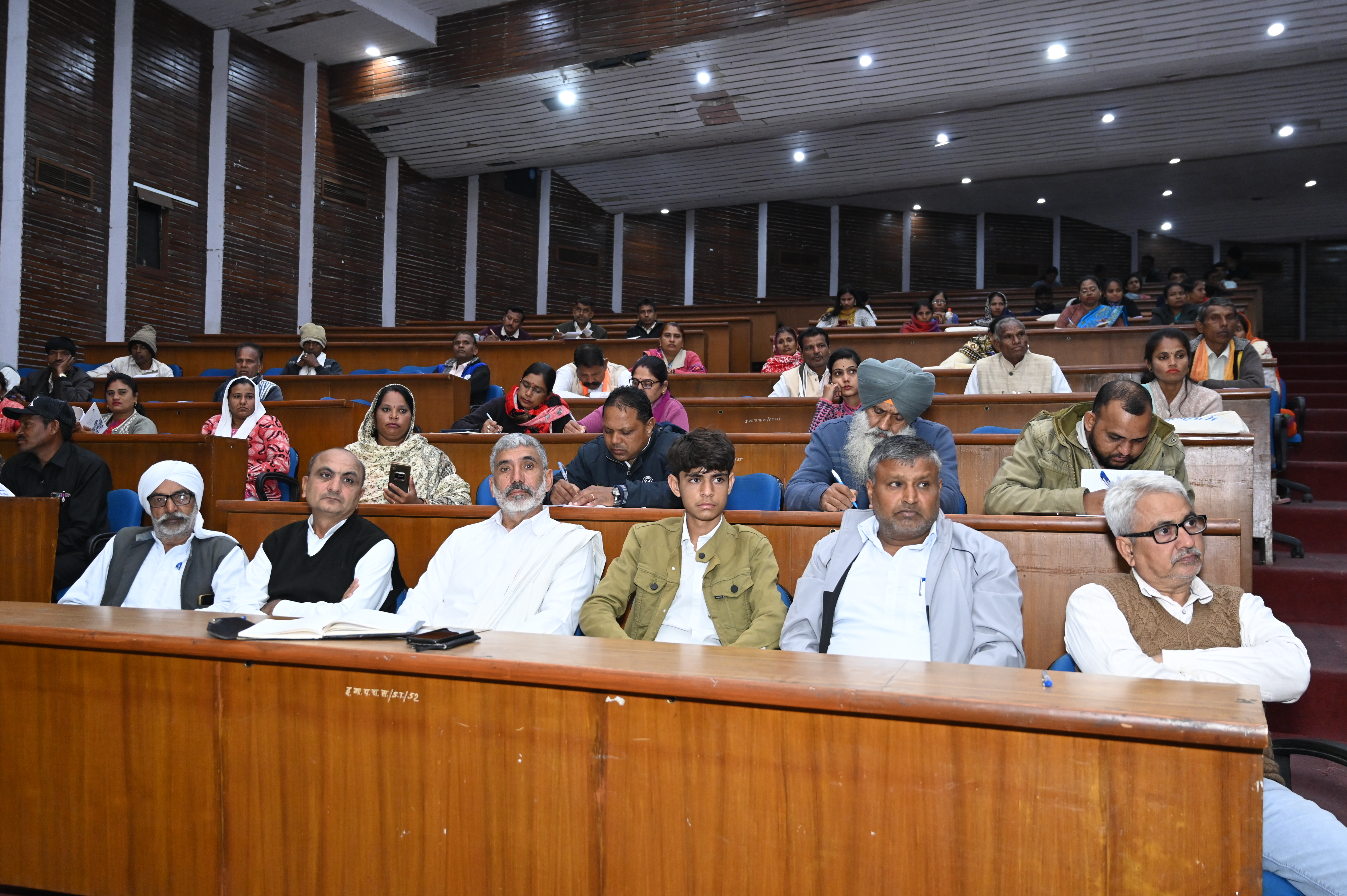
The conference opened with a traditional Mitti Poojan, symbolising the central role of soil in sustaining life and livelihoods. Speakers highlighted that India’s predominantly smallholder-driven agriculture cannot survive on chemical-intensive, monocrop-based models that erode natural resources and farmer incomes.
Introducing the Bhoomi Ka network, speakers emphasised agro-ecology as a farmer-centric approach that works with nature while strengthening livelihoods. The discussions were anchored around three core pillars:
- Agro-ecological strengthening of small and marginal farmers
- Value chain development through processing, branding, and certification
- Market equity, ensuring fair prices and dignified returns for farmers
The sessions underscored that food system transformation must balance environmental sustainability with economic viability.
Learning from the Ground: Bhoomi Ka’s Impact
A key focus of the conference was learning from real-world experiences of FPOs and SMEs engaged with Bhoomi Ka. Speakers shared how collective farming, participatory certification, and market linkages have enabled farmers to move from subsistence to surplus.
Several FPOs reported significant growth after adopting professional systems for documentation, processing, and branding. Turnovers that once stood at a few lakhs had crossed the ₹1 crore mark, demonstrating the potential of farmer-led enterprises when supported with the right market access and capacity building.
However, participants also raised concerns. Growing market demand has sometimes pushed farmers toward monocropping, which threatens soil health and agro-ecological principles. The dialogue reinforced that market success should not come at the cost of ecological integrity.
Certification, Trust, and the Consumer
Another major theme was organic certification — particularly the role of PGS and NPOP systems. Speakers clarified that certification is not merely a compliance requirement but a tool to build consumer trust and unlock better market opportunities.
At the same time, challenges such as high costs, extensive documentation, and limited consumer awareness were acknowledged. Participants called for simplified certification processes, government support to reduce costs, and stronger efforts to educate consumers on what certification truly represents.
The need for truth in labelling emerged strongly, with participants urging stricter monitoring to prevent misuse of organic labels that undermine genuine farmers.
Markets, Policy, and the Role of the State
Policy dialogues during the conference highlighted recent efforts to strengthen FPOs through national and state-level initiatives. Government representatives shared updates on new FPO policies aimed at easing licensing, supporting infrastructure, and professionalising FPO management.
Speakers stressed that local markets must be the foundation of any sustainable food system. Selling a significant share of produce locally reduces climate risk, transportation costs, and dependence on volatile external markets. Reviving traditional Haat bazaars, strengthening Panchayat linkages, and investing in local processing infrastructure were identified as key priorities.
There was also a strong call for “patient capital” — long-term financial support that allows FPOs to stabilise and grow over 6–10 years, rather than short-term project-based funding.
Emerging Opportunities and the Road Ahead
The second day focused on future trends and opportunities. Experts highlighted the growing role of digital platforms, ethical branding, and youth engagement in agriculture. Carbon credits, local processing technologies, and digital marketplaces were identified as emerging areas that could add value for farmers if designed inclusively.
Discussions concluded with reflections on Bhoomi Ka’s evolving role — not merely as a market platform, but as a knowledge partner, convener, and advocate for farmer-led food system transformation.
Celebrating Leadership and Commitment
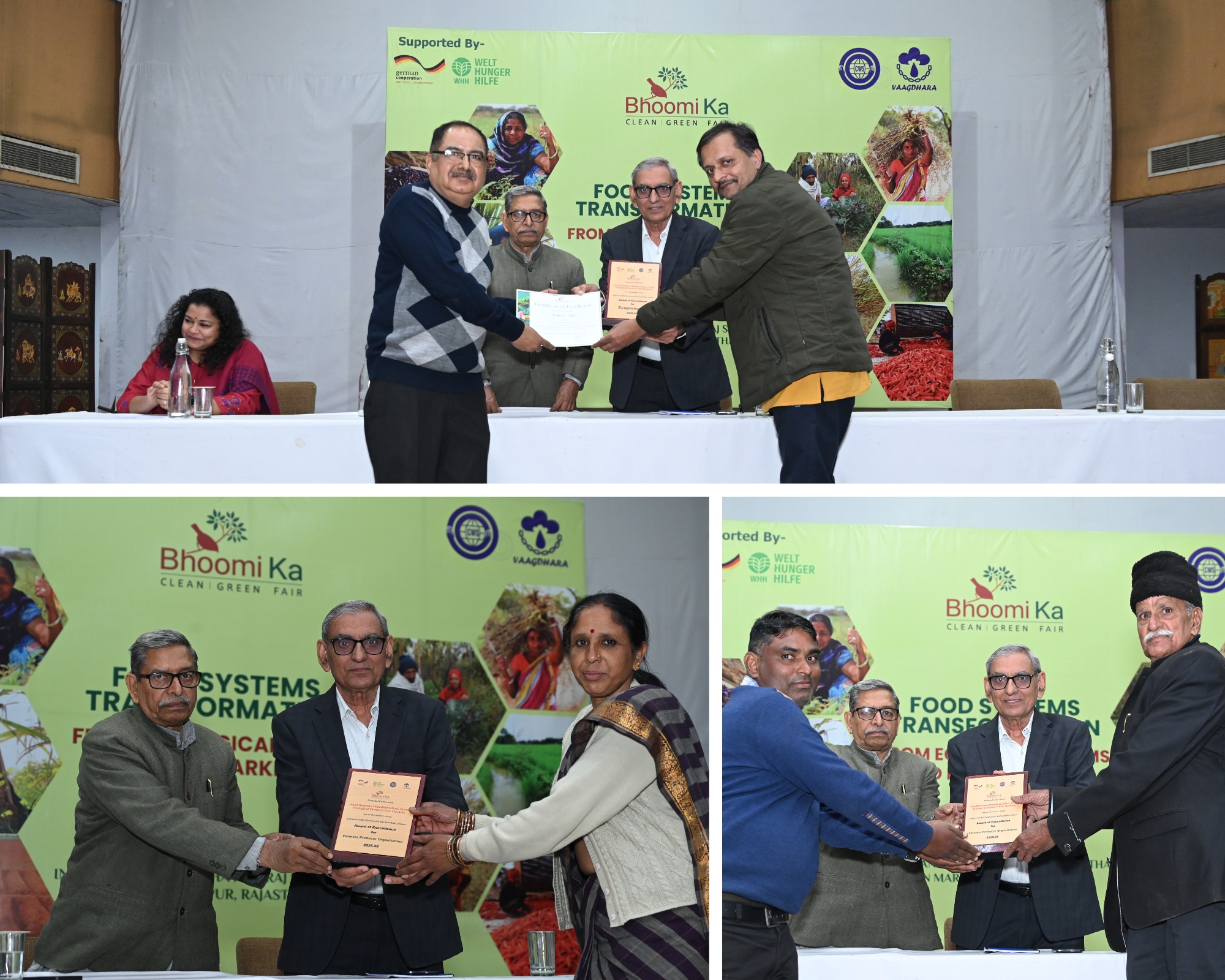
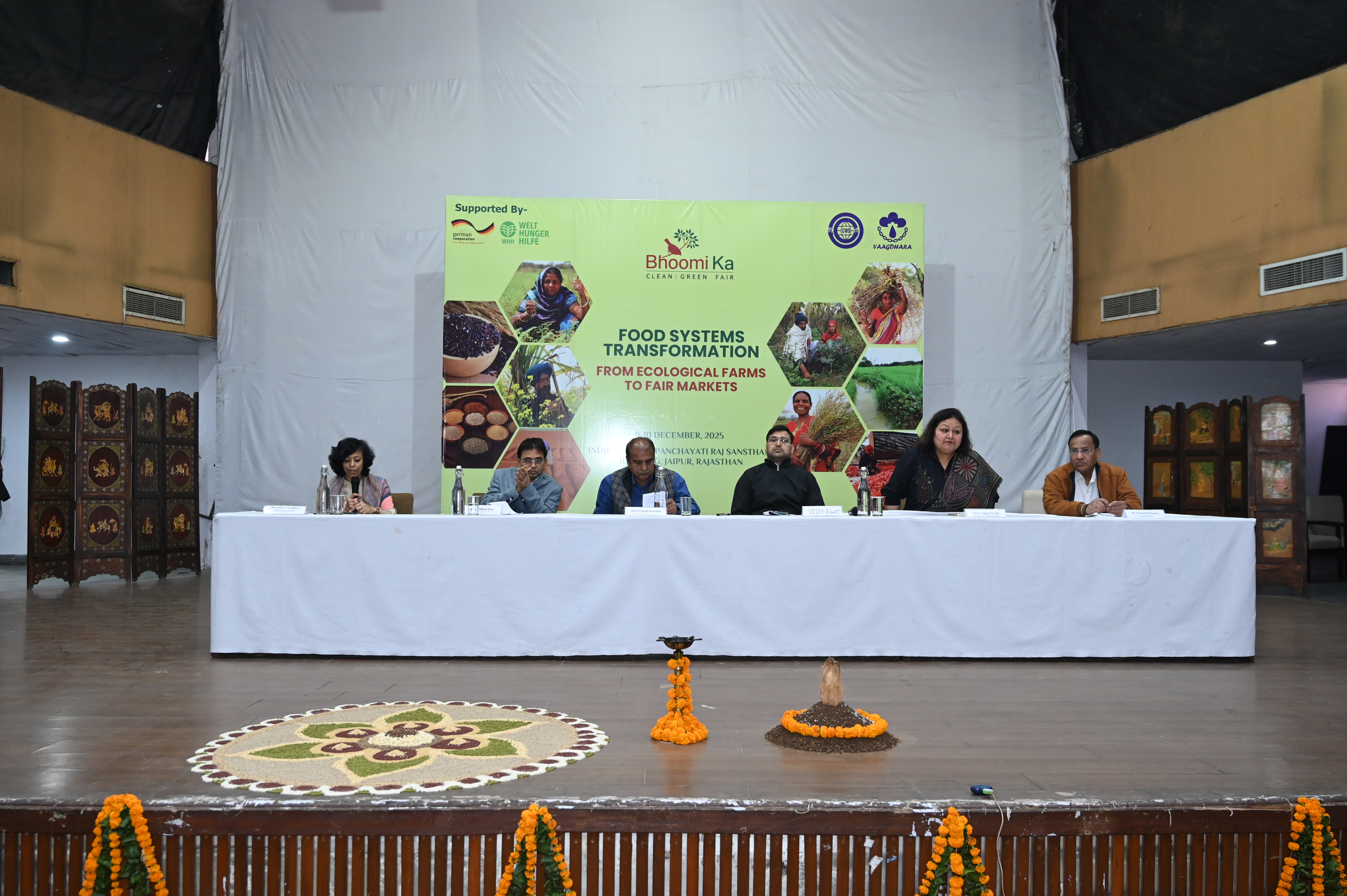
The conference concluded with the Bhoomi Ka Champion Awards, recognising FPOs and SMEs that demonstrated strong financial performance, ethical practices, and commitment to farming communities. These stories served as reminders that transformation is already underway — led by farmers themselves.
Towards Clean, Green, and Fair Food Systems
The National Conference reaffirmed a shared vision: food systems that are clean for the environment, green in practice, and fair to farmers and consumers alike. Moving forward, participants committed to strengthening agro-ecology, simplifying certification, building transparent markets, and deepening policy engagement.
As Bhoomi Ka continues its journey, the insights and alliances forged in Jaipur will guide collective action toward food systems that nourish people, protect nature, and uphold farmer dignity.