
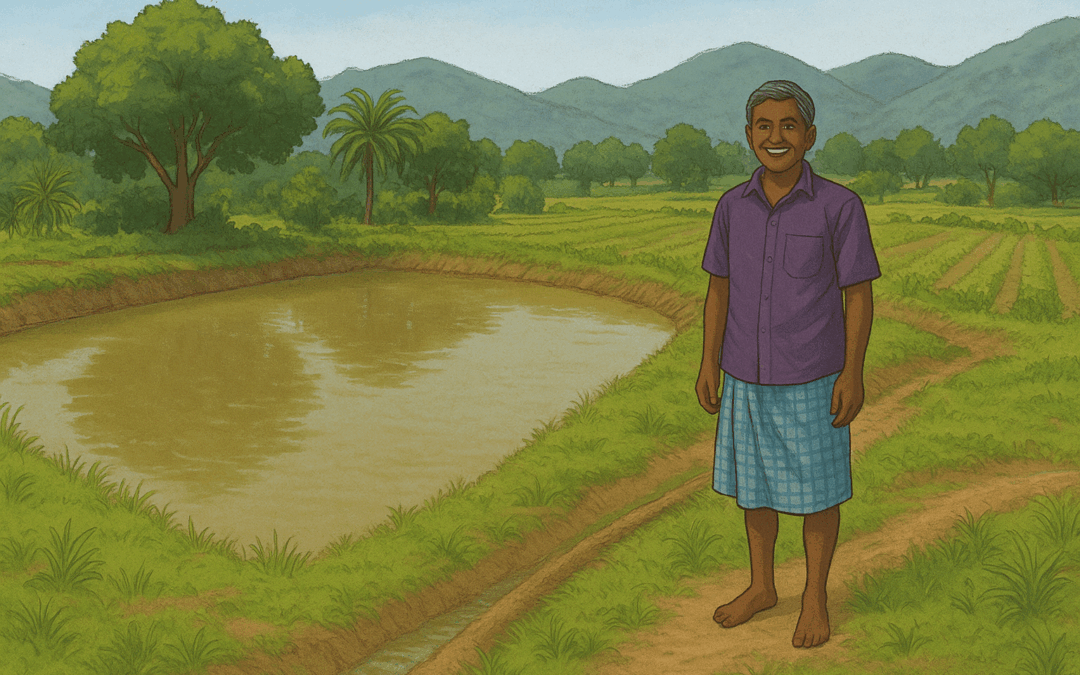
Location: Phulghori, Saraikela-Kharsawan, Jharkhand
Farmer: Bishu Sardar
Practice: Natural and Chemical-Free Farming
Innovation: Farm Ponds (Hapa/Dobha)
For decades, farmers in the upland regions of Rajnagar have faced a persistent challenge. Despite receiving adequate rainfall, most of the water quickly ran off the rocky terrain, leaving fields dry within days after the monsoon. This made it difficult to grow even a single crop each year, keeping sustainable, chemical-free farming out of reach for smallholders like Bishu Sardar.
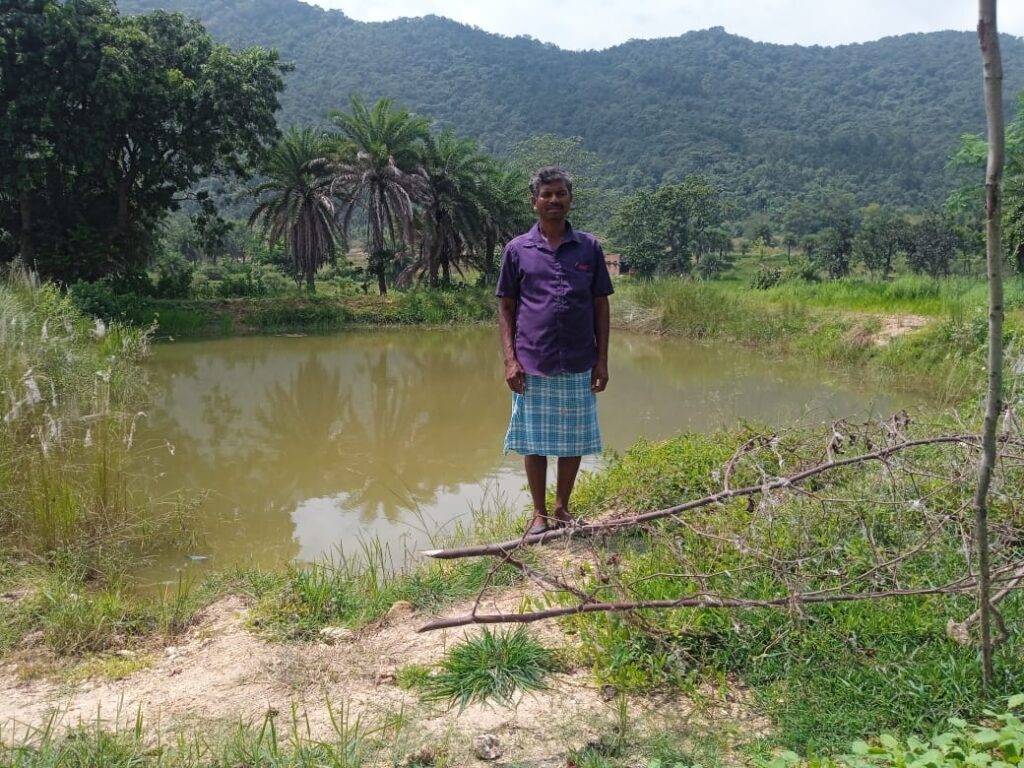
With the support of CWS–Bhoomi Ka, Bishu and other farmers began implementing a simple yet effective solution — small, low-cost farm ponds locally known as hapa or dobha. These ponds capture and store rainwater during the monsoon, creating a reliable water source for irrigation throughout the year. Farmers identify a natural runoff point, excavate a pond (typically around 70 x 40 x 4.5 feet), and fit it with a small outlet pipe at the base. Water flows by gravity through narrow channels to irrigate nearby fields, requiring no fuel or electricity.
This low-cost intervention has proven to be transformative. With assured access to water, farmers can now irrigate their crops during dry spells, preventing losses and improving yields. Many have diversified from single-crop paddy to include vegetables, pulses, and even horticulture crops like papaya. The improved soil moisture has also contributed to healthier soils and stronger root systems, enhancing the long-term sustainability of natural farming practices.
The impact has been remarkable. Several farmers in the area have moved from cultivating one rain-fed crop to producing two or three crops annually. Income from vegetable farming has increased by 40 to 50 percent, creating greater financial stability for farming families. The presence of these ponds has also improved groundwater levels, contributing to drought resilience in the surrounding landscape.
Through this initiative, CWS–Bhoomi Ka continues to demonstrate that simple, locally driven solutions can have far-reaching effects. By addressing water scarcity, these farm ponds have not only strengthened the foundations of chemical-free agriculture but have also enabled smallholders to participate more confidently in ecological markets.
This approach exemplifies how natural resource management and agroecological principles can work hand in hand to build climate-resilient livelihoods and sustainable rural economies.